There is a paradox at the heart of modern television. Viewers have access to more content than ever before, thousands of channels, streaming platforms, on-demand libraries, and yet the device they use to navigate all of it is still a handheld rectangle with buttons. The remote control hasn’t disappeared. If anything, it has become more important. And that means the pressure to get it right has never been greater.
At t4h., we have spent almost two decades asking one deceptively simple question: what does a great remote control actually feel like to use? The answer always comes back to the same principle: simplicity. Not the absence of features, but the intelligent curation of them.
The Complexity Trap
As new features emerge, from voice control to smart home integration and platform switching, the instinct is often to add more controls to the remote. A new button appears here, an extra mode there, until the device that was meant to feel intuitive begins to resemble a small keyboard that requires a manual. This is the complexity trap. It happens gradually, driven by genuine innovation, but the cumulative effect on the user is the opposite of progress. Cognitive load increases, mistakes multiply, and the person on the sofa who simply wants to watch something is left feeling like the technology is working against them.
The challenge for remote control designers isn’t a lack of capability. It’s restraint. The courage to decide what not to include, and the craft to make what remains feel completely natural.
Simplicity Is Not Subtraction
Simplicity is frequently misunderstood. A remote with three buttons may be simple, but it is not necessarily a good experience. It just pushes the complexity elsewhere, usually onto the screen or the user’s memory.
True simplicity is about alignment. Every button, every curve, every weight distribution should serve the user’s actual goals. It means designing for the moments that matter most: the quick pause, the volume nudge at midnight, the instinctive reach for the home button when you’re lost in a menu.
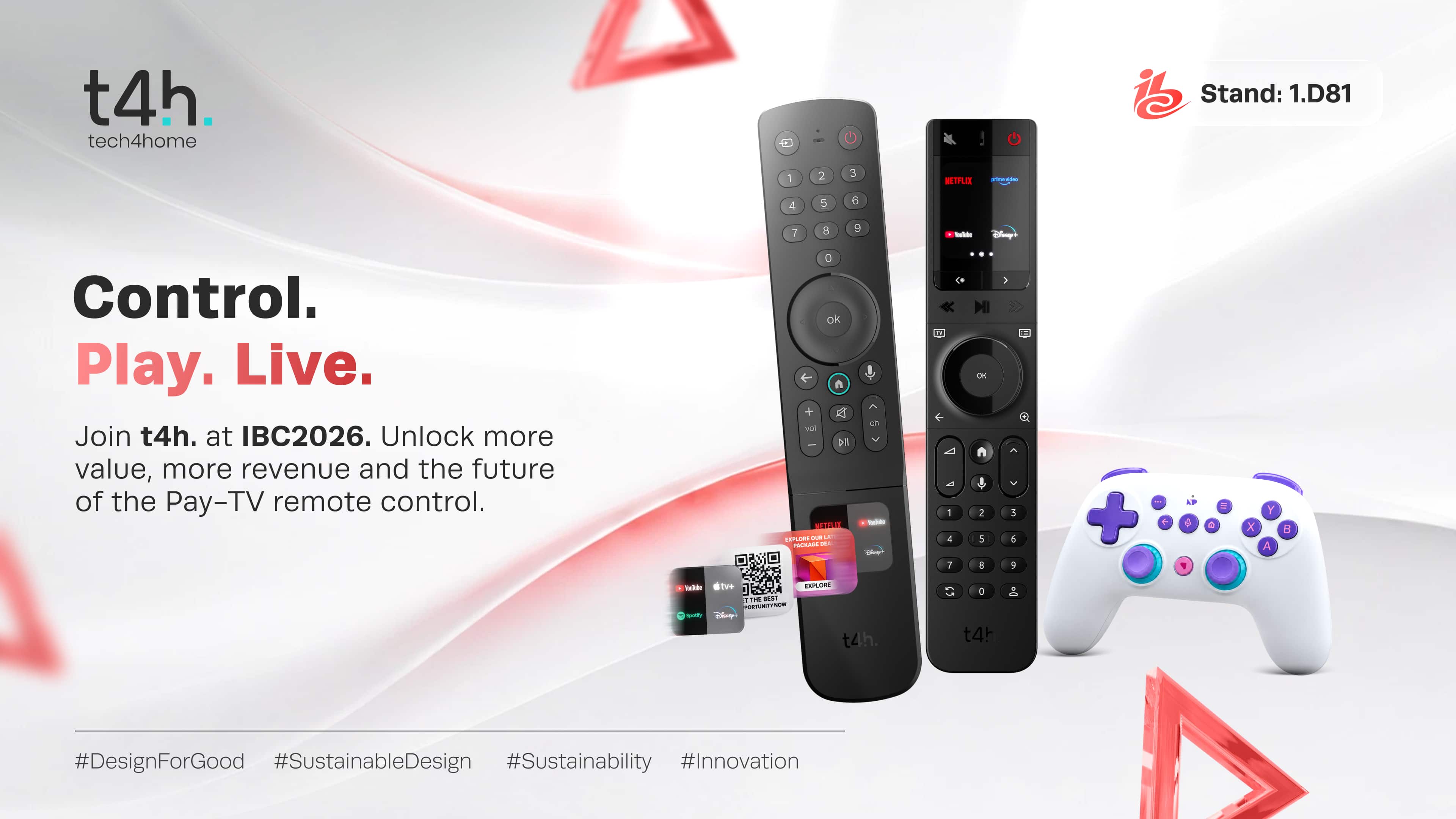
This is exactly the thinking behind our Pegnitz Series, which pairs a minimalist geometric layout with backlit buttons, tactile detailing, and a non-slip rubber backpad. Nothing is there by accident. Every element earns its place by making the experience more natural, not more impressive on a spec sheet.
Designing for Real People
Great remote design starts with understanding who is actually holding the device. t4h.’s senior-friendly remotes feature large high-contrast buttons, simplified layouts, and voice command support, because reducing confusion is not a compromise, it is the goal. The same philosophy shapes our kids’ remotes, where durability, colour-coding, and parental controls take priority.
The best remotes disappear into the experience. That’s the standard worth designing to.
A Commercial Argument Too
For PayTV operators, remote control UX is a business-critical decision. A remote that confuses subscribers generates support calls. One that frustrates new users accelerates churn. A remote that feels intuitive reinforces the value of the service and builds quiet, lasting loyalty.
The remote control is one of the most consistent daily touchpoints between an operator and their customer. It deserves to be treated as a strategic asset, and simplicity has to be built in from the start, not applied at the end once the complexity is already baked in.
At t4h., that is the work we show up to do every day. Because in a world of increasing complexity, the most sophisticated thing a device can do is feel effortless.
Share: