Diversity and inclusion in media are often discussed through content, but the real barrier for many people appears long before a programme starts. It begins with something much simpler: access.
Why Inclusive Access Starts With the Device in Your Hand
Diversity and inclusion in media are often discussed through content, but the real barrier for many people appears long before a programme starts. It begins with something much simpler: access. Can a child use the service without help? Can a senior navigate it with confidence? Can someone with reduced mobility, low vision, or limited digital experience enjoy the TV service the same way everyone else does?
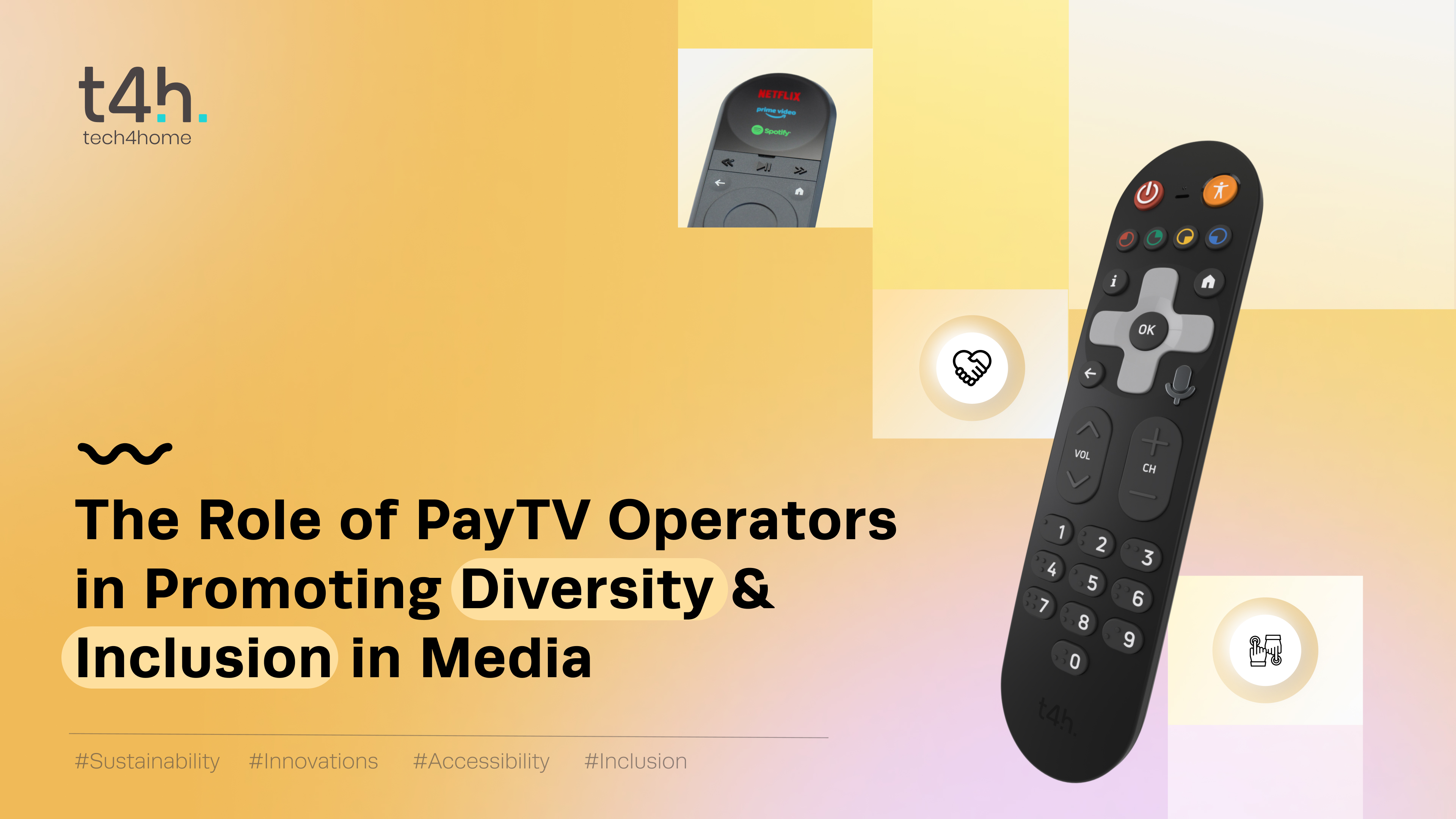
For families, the remote is the gateway to entertainment, education, and connection. Its design determines who can participate and who gets left out. When the buttons are intuitive, when the shape fits comfortably in different hands, when the navigation is clear and forgiving, the entire experience becomes more accessible. Seniors who may struggle with complex technology suddenly feel in control. Children gain independence and can explore safely. Users with visual or motor limitations no longer face unnecessary barriers.
Inclusion becomes invisible, simply part of the experience.
At t4h., this philosophy guides how we design devices. We look at how real households behave: the grandparent who wants simplicity, the parent who wants safety for their child, the teenager who wants speed, the user with reduced dexterity who needs tactile guidance. A remote that works for all of them is not just a better product, it is a statement of accessibility and respect.
Accessibility, however, is not limited to hardware. It extends into the way services respond to different needs. Interfaces that adjust for visibility, clear menu structures, responsive voice interaction that recognises diverse accents, all of these transform who can comfortably engage with a PayTV service. When navigation becomes intuitive, usage rises across generations, including those who are often excluded by digital complexity.
Children and seniors are two groups who benefit the most from inclusive PayTV design. Children need simplicity and safety, the ability to explore without getting lost in screens meant for adults. Seniors often face the opposite challenge, too many layers, too many menu steps, too many assumptions about tech confidence. When operators prioritise these audiences, the entire service becomes more humane.
There is also a direct link between inclusion and sustainability. Long-lasting devices, recycled materials, and energy-harvesting remotes make access easier and more affordable for households.
A device that doesn’t require disposable batteries is not only better for the environment; it reduces cost, simplifies use, and supports long-term digital access, especially in communities where replacing batteries is not always convenient.
Ultimately, inclusive PayTV experiences are not built through content alone.
They are built through the everyday interactions that determine who can participate. PayTV operators who focus on accessible hardware, intuitive interfaces, and human-centred design become enablers of digital inclusion. Those who ignore these touchpoints risk leaving entire segments of their audience behind.
At t4h., we believe that inclusion is achieved through design that understands households, respects differences, and anticipates real-world needs. The future of PayTV will be defined not only by technology, but by how easily people can access it, every age, every ability, every household, with no one left behind.
Share: